Not sure what to ask for?
 Don’t see your street?
North central Florida oaks don't follow the tidy dormant-season rules you read about for New England maples. Live oaks and laurel oaks here hold most of their leaves through winter and then swap them out in a rush in early spring. That swap, more than the calendar, is what decides good timing. The goal is simple: make bigger cuts when the tree has stored energy to respond, and keep it light when the tree has just spent that energy on new growth.
Oak Tree Trimming in Gainesville Follows the Spring Flush
UF/IFAS horticulture guidance notes that right after the flush of new growth, a tree has used a great deal of stored energy to produce roots, leaves and early shoots, so heavy pruning at that moment is usually not recommended. In Gainesville, that flush typically arrives in late winter and early spring. Live oaks drop their old leaves and push new ones within a few weeks, and the yard fills with leaves and pollen strands.
That doesn't make spring off limits. It means the bigger live-branch work, such as reduction cuts that shorten heavy limbs, fits better before the flush or after the new leaves have hardened off. Small clearance cuts and dead wood are fair game in any month.
Best Time to Trim Oak Trees in Gainesville, Month by Month
| Months | What the oaks are doing | Trimming that fits |
|---|---|---|
| December to early February | Slow growth, cool weather, full canopy on live oaks | Structural work, reduction, thinning, clearance |
| Late February to April | Old leaves drop, new flush pushes out, birds start nesting | Light clearance and deadwood; check for nests first |
| May | New leaves firming up, dry weather common | Moderate pruning on healthy trees; last call before storm season |
| June to September | Summer growth, daily thunderstorms, hurricane season | Deadwood, clearance, storm repair; avoid heavy cuts on stressed trees |
| October to November | Growth slows, hurricane season winds down | Good window for most trimming and for planning winter work |
Winter: the most flexible window
December through early February is the easiest time for a big trimming job on a healthy oak. Growth is slow, the tree has its reserves, and the weather is kind to crews and lawns. On a deciduous oak such as a turkey oak or southern red oak, bare branches also make structure easy to read. If you have a large job like live oak trimming or a reduction over the roof, this is the window to aim for.
Early spring: go light
From late February into April, the flush and the start of nesting season both argue for restraint. Trimming that only lifts a limb off the gutter or clears a walkway is fine. Taking a large share of live canopy while the tree is pushing new leaves is a harder hit.
Summer: storms change the priorities
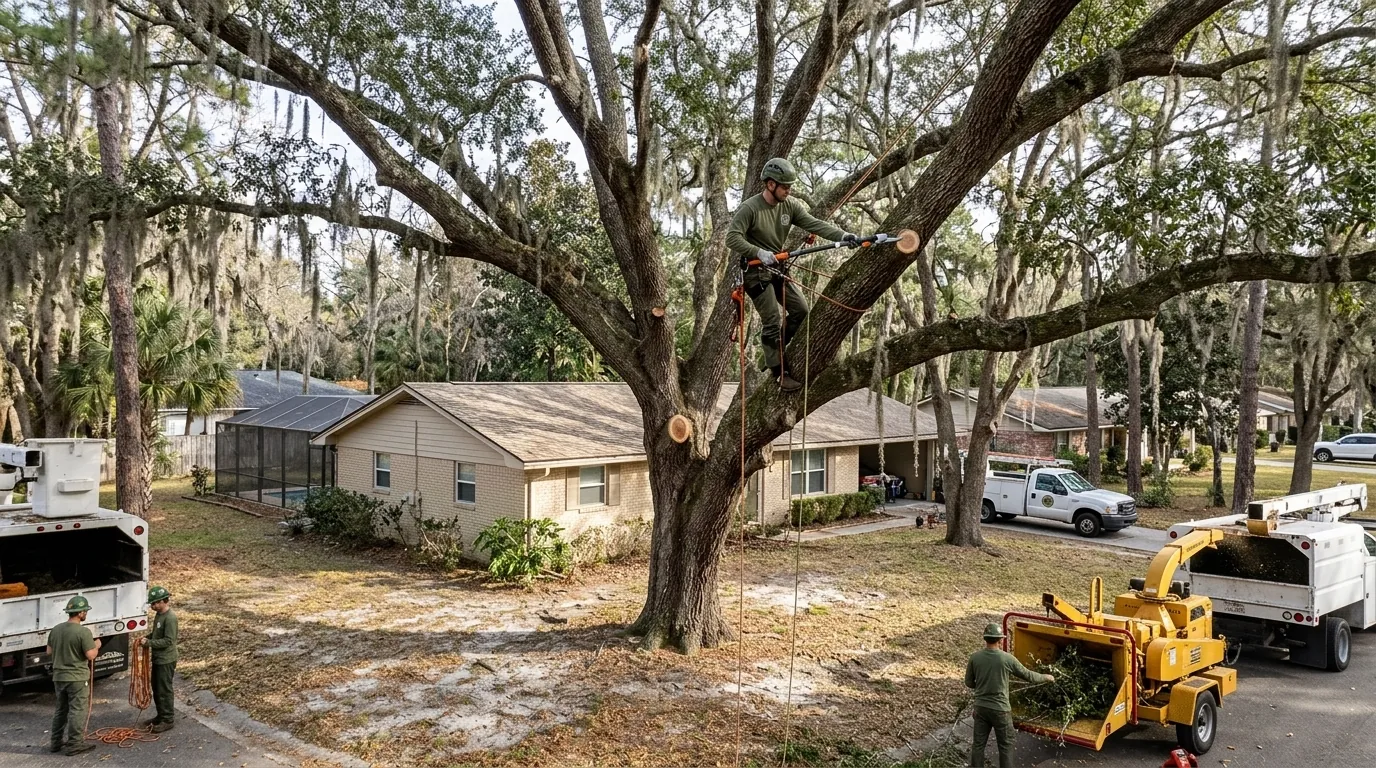
Summer brings near-daily afternoon storms, and the official hurricane season spans June 1 through November 30. That makes summer a good time to catch dead limbs and anything cracked or hanging, but not the best time for large reductions on a tree already stressed by heat or a dry spell. If you're thinking about storm prep, the planning really belongs in winter and spring. Our live oak hurricane prep guide covers that work in detail.
Fall: a second good window
October and November are often overlooked. Growth slows, the summer storm pattern breaks, and you can deal with anything the season left behind. It's also a smart time to book winter work before the spring rush.
Trimming Oaks in Gainesville During Bird Nesting Season
Spring is nesting season for many birds, and oak canopies are prime nesting spots. The federal Migratory Bird Treaty Act protects most native birds, and that protection covers active nests with eggs or young. Before any spring trimming, the canopy should be checked for nests. If an active nest sits in a limb scheduled for cutting, the usual answer is to leave that limb and come back once the nest is empty. Squirrel nests in the crown are worth noting too, since young squirrels are often in them in late winter and again in late summer.
Deadwood and Hazard Cuts Don't Wait for the Right Month
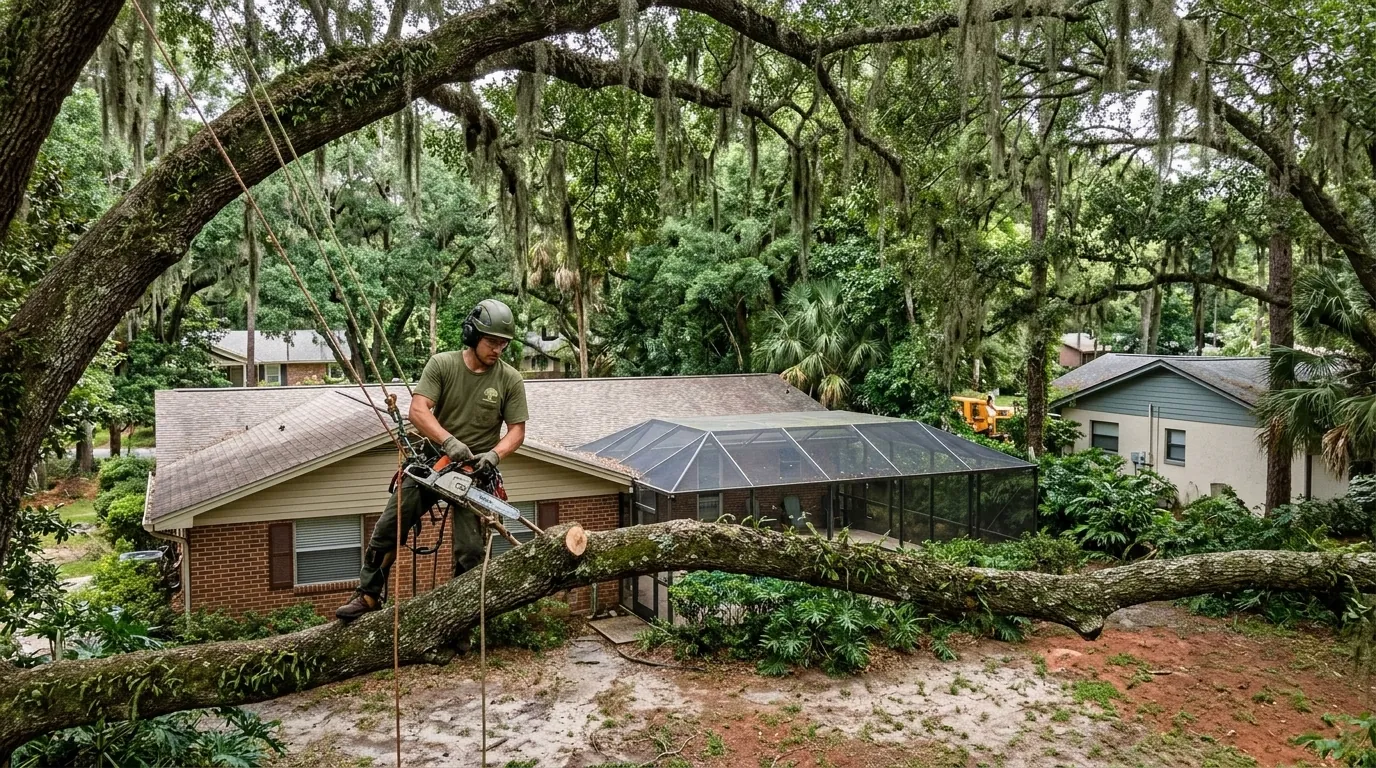
Timing advice applies to live branches. Dead limbs don't respond to the season, and a dead oak limb over a bedroom roof is a reason to call this week, not next winter. Deadwood removal can be done any month, and so can a cut that removes a cracked or hanging limb after a storm.
- Any month: dead limbs, broken or hanging limbs, limbs rubbing the roof or touching the service wire to the house.
- Better in cooler months: reduction cuts, thinning across the crown, correcting a codominant leader on a large tree.
- Best when the tree is young: structural pruning to pick a single leader and space out main limbs.
When to Prune Young Oak Trees in Gainesville
Young oaks forgive a lot. Their cuts are small, they close quickly, and a few minutes with hand pruners can prevent a split trunk 20 years later. Winter or late fall is ideal, but light structural cuts can be made most of the year as long as you avoid removing a large share of the leaves. A program of young tree pruning every two or three years while the tree is establishing sets up the structure that storm pruning later depends on.
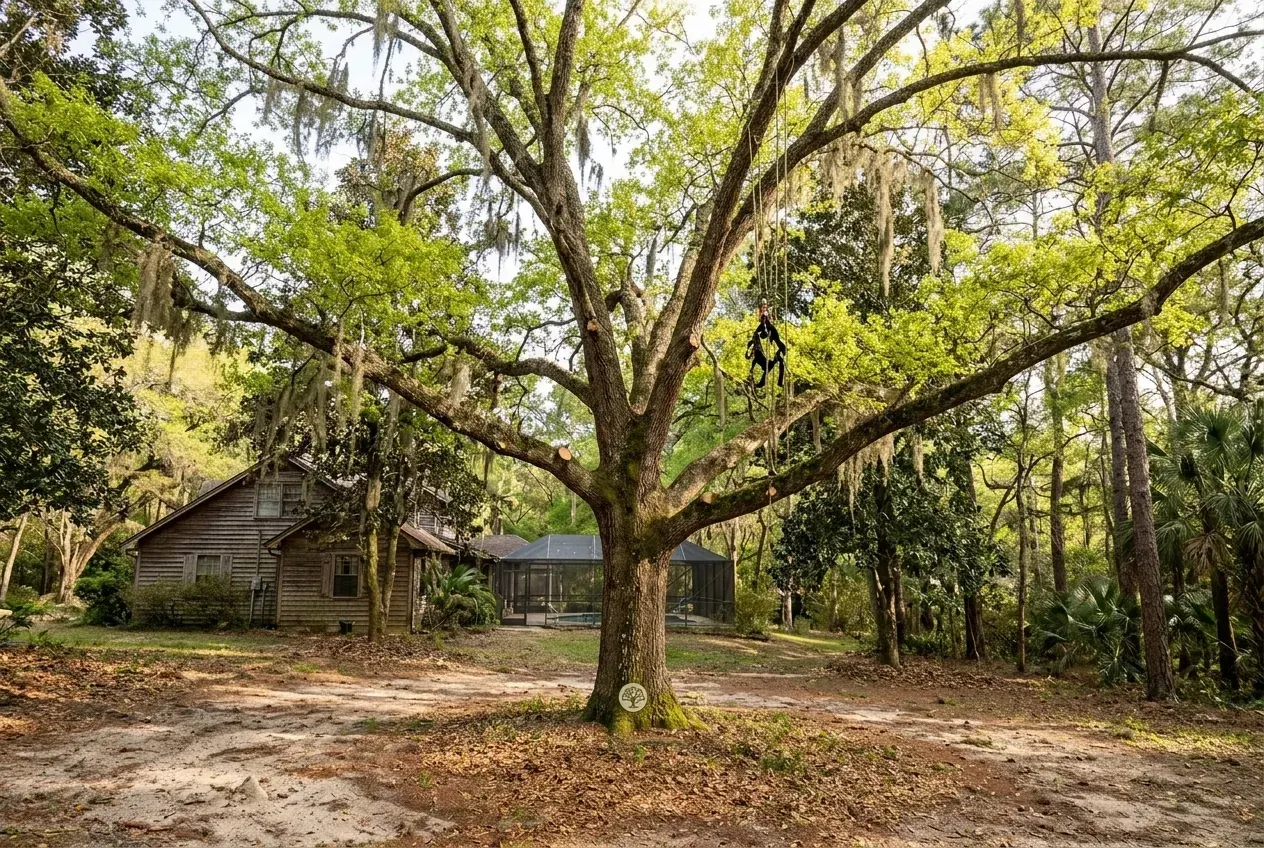
Gainesville Oak Trimming Timing by Species
- Live oak and sand live oak. Evergreen in practice, with a quick leaf swap in early spring. Plan reductions for winter or late spring after the new leaves harden.
- Laurel oak. Also holds leaves through most of winter. Many in Gainesville are mature and carry decay, so deadwood checks matter more than the calendar.
- Water oak. Fast-growing and prone to weak forks. Light, regular trimming beats occasional heavy cuts.
- Turkey oak and southern red oak. Deciduous. Winter, with the leaves off, is the easiest time to see and fix structure.
Oak Trimming Timing Across Gainesville Neighborhoods
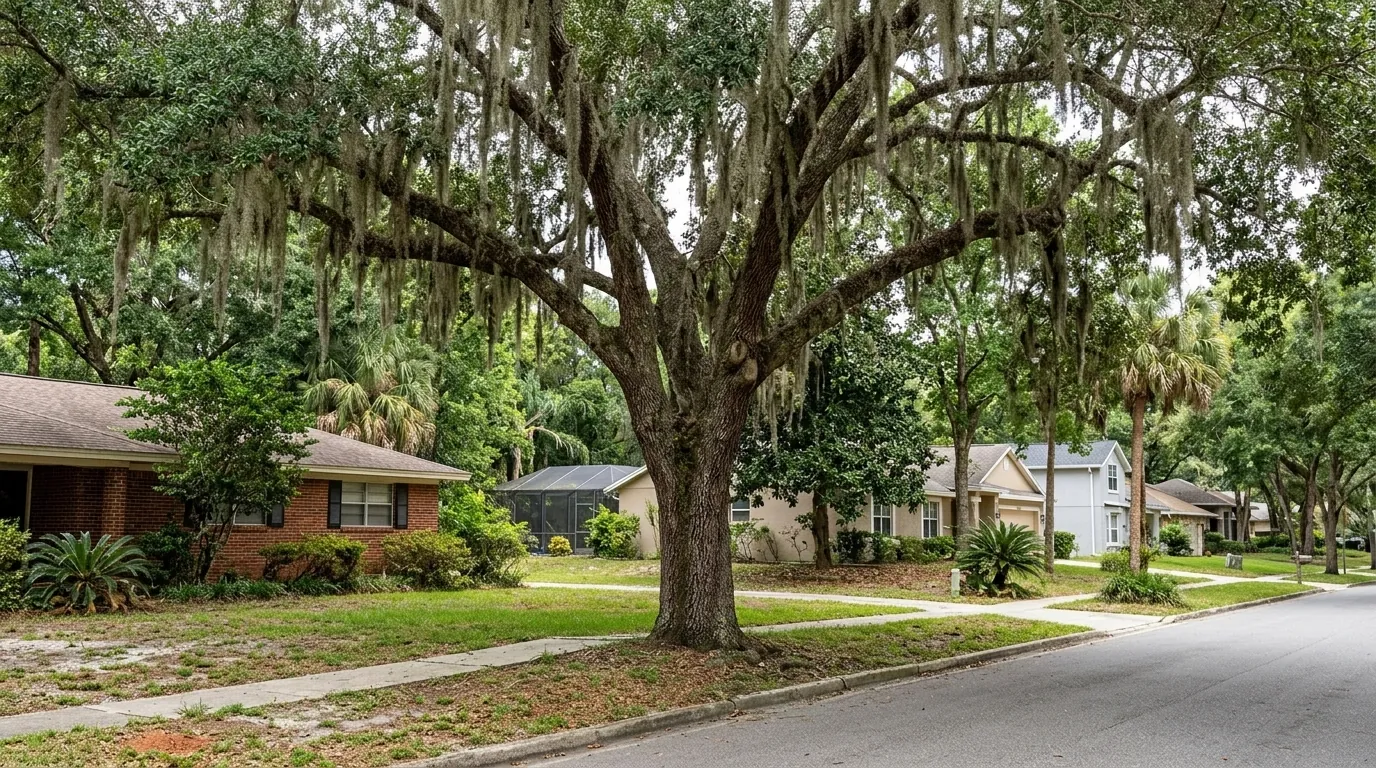
The best month doesn't change by neighborhood, but what's under the tree does change how carefully timing matters. In Duckpond, big old oaks over older homes and narrow streets make winter, with lighter traffic in the yard and dry ground, a practical choice. In Millhopper, wooded lots often mean several oaks are trimmed together, which is easier to schedule in the cooler months. On larger properties toward Tioga, newer plantings are often at the age where structural pruning pays off most.
Oak Tree Trimming in Gainesville During Dry Spells
Weather inside a season matters too. In north central Florida, late spring is often the driest stretch of the year, before the summer rains settle in. An oak that has gone weeks without a good soaking is already under stress, and taking off a lot of live canopy at that moment adds to it. If a healthy oak needs major work in a dry month, it helps to water the root zone deeply in the days before and after, and to keep the dose of pruning light. Wet weather has its own trade-off. Soft, soaked lawns rut easily under equipment, so a crew may lay down mats or carry brush out by hand after a week of storms.
None of this means waiting on the perfect forecast. It means matching the size of the job to how the tree is doing that week. A big reduction can wait a month for rain. A cracked limb over the porch can't.
Planning Oak Tree Trimming in Gainesville This Year
- Walk the yard in fall and note dead limbs, limbs on the roof and anything over the driveway or pool cage.
- Book bigger live-branch work for winter, before the spring flush.
- Handle deadwood and anything touching the house right away, whatever the month.
- Schedule any storm-prep work so it's done before June.
- Put young trees on a light structural schedule every couple of years.
If you want help sorting out what's urgent and what can be scheduled later, look over our tree trimming services, check what oak trimming typically costs, or ask for a free estimate. We serve all of Gainesville and Alachua County.